What Leads To True Mastery In Any Field (It's Not What You Think)
Look, not everything you create is going to be incredible. That's just a fact. If you want to become world class at anything, if you want to really master something, you have to have high volume output. You have to create. A LOT. You have to practice and you have to be consistent. Within this volume and consistency, you'll eventually produce a few golden, noteworthy pieces.
This is why I write every single day. Most of what I write is shit. A small percentage makes it onto this blog. An even smaller percentage is well received. But to get to that tiny percentage, I write. and I write. A lot.
I'm prolific as hell. I crank out a hell volume of work. And because of that, eventually, inevitably, statistically, some of the blogs will be great. Not because I'm a great writer, just because it's a numbers game. You can't write create/write for years on end and not crank out a few five star pieces.
Trouble is, most people give up way before then.
What “Prolific” Actually Means
Prolific (adjective):
- Producing a large quantity of work, results, or output consistently.
- Highly productive or fertile. Can apply to ideas, creativity, or even biological reproduction.
What we're talking about here is frequency, repetition, and sustained production.
You publish before you feel fully ready, share ideas while they’re still forming and allow your work to evolve in public. The point is to have as many opportunities as possible to iterate and refine.
Each piece you produce refines your thinking.
Each attempt sharpens your voice.
Each output moves you forward.
Mastery isn’t something you wait for. It’s something you build through consistent creation. You have to practice. You have to get your reps in.
Don't be delusional and think you can skip the dirty, hard practice phase and hop straight into mastery. If you want to be exceptional at any particular thing, you have to crank out a lot of MIERDA.
Pablo Picasso: Volume Before Recognition
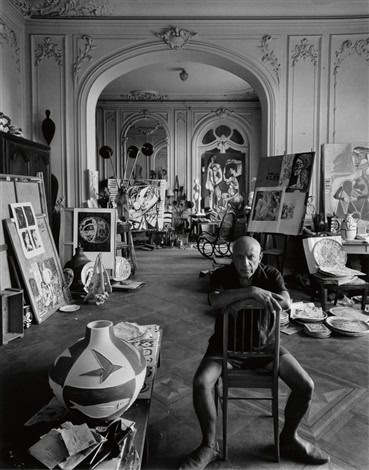
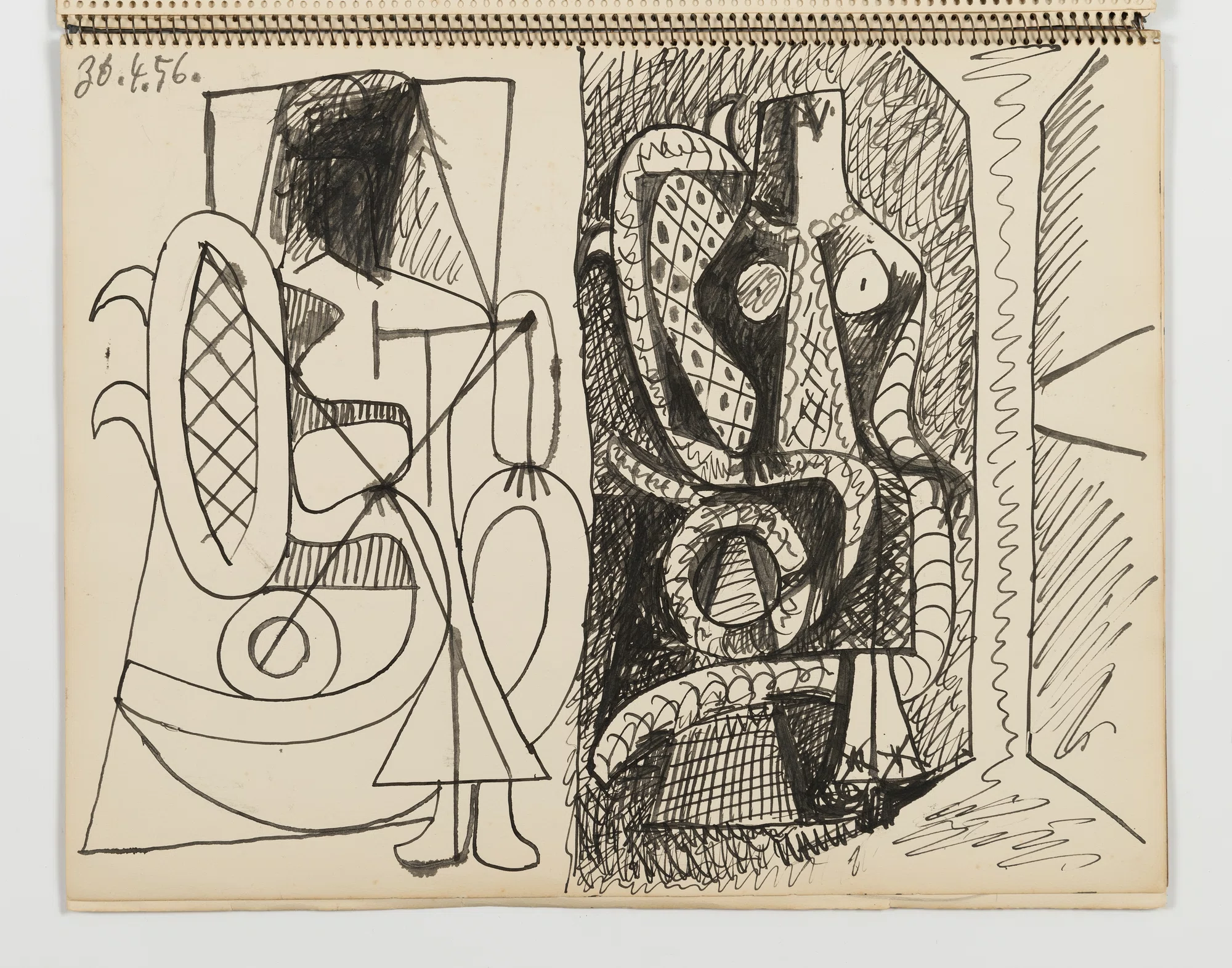
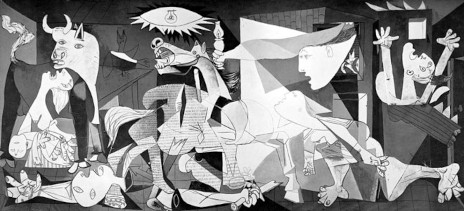
Picasso created an estimated 50,000 works over his lifetime.
Paintings, sketches, ceramics, sculptures.
Only a small fraction became globally recognized.
The rest? Practice. Exploration. iteration. Crapola.
Without the thousands of unseen pieces, the iconic ones wouldn’t exist.
Stephen King: Consistency Over Perfection

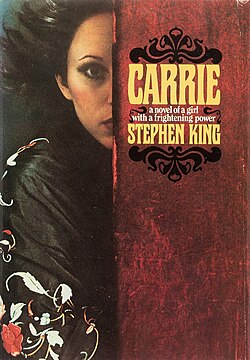

Stephen King has written over 65 novels and 200+ short stories.
Not every book is awesome. Some of them suck. Like Dreamcatcher.
But a few are considered classics (The Shining).
Because he kept writing.
He didn’t wait for every idea to be exceptional. He developed his voice through consistent output.
Every famous person you know; singer, songwriter, musician, artist... is famous for just the tiny minority of work they produced.
The Data: Why Volume Produces Quality
Research in creativity shows that top performers don’t necessarily produce better work on average. Instead, they produce more work overall, increasing their chances of creating something exceptional (Simonton, 1997). This aligns with the “equal-odds rule,” which suggests that the likelihood of producing high-quality work rises with total OUTPUT.
If only 10–20% of what you create is exceptional, then the path to exceptional work is stupidly simple:
JUST CREATE MORE.
Practice. Get your reps in. Produce.
The Shift for Entrepreneurs
The goal isn’t to create perfect content or perfect offers.
The goal is to create enough offers and content that great ones becomes inevitable.
Because when you create consistently:
Your thinking becomes clearer.
Your message becomes stronger.
Your confidence increases.
Your results improve.
Not all at once.
But over time.
Key Takeaways
- Being prolific means creating consistently without waiting for perfection
- Most output will be average, and that’s part of the process
- A small percentage of content will perform exceptionally
- Volume increases the likelihood of discovering what works
- Mastery is built through consistent creation, not isolated brilliance
Reflection Questions
- Where are you waiting for perfection instead of creating consistently?
- What would change if you focused on volume instead of individual outcomes?
- How many pieces of content are you currently producing each week?
- What would it look like to double that output for the next 30 days?
- Are you giving yourself enough opportunities to discover your best work?
1. Dean Keith Simonton (Creativity Researcher)
Source: Simonton, D. K. (1997). Creative productivity: A predictive and explanatory model of career trajectories and landmarks. Psychological Review, 104(1), 66–89.
Key Finding: Simonton found that highly creative individuals (e.g., artists, composers, scientists) are not necessarily more consistent in producing high-quality work. Instead, they generate a large volume of work, and a small percentage of that output becomes exceptional.
Supporting Concept: “Equal-odds rule” — the idea that the probability of producing a major hit is proportional to total output. In simple terms: more work → more chances at greatness.
2. The “Ceramics Class” Story (Popularized Example)
Source: Origin often attributed to David Bayles & Ted Orland, Art & Fear (1993)
Summary: A ceramics teacher split a class into two groups: One graded on quantity (produce as many pots as possible) and one graded on quality (produce one perfect pot) Result: The quantity group produced higher-quality work because repetition, iteration, and practice improved their skill.
Note: While widely cited in creativity discussions, this is more anecdotal than rigorously experimental—but it aligns with formal research findings.
3. Mihaly Csikszentmihalyi (Flow & Creativity)
Source: Csikszentmihalyi, M. (1996). Creativity: Flow and the Psychology of Discovery and Invention.
Key Insight: Creative breakthroughs emerge from extended engagement and repeated attempts, not isolated efforts at perfection. High output increases the likelihood of entering “flow” states and producing meaningful work.
4. Robert Weisberg (Creativity Research)
Source: Weisberg, R. W. (2006). Creativity: Understanding Innovation in Problem Solving, Science, Invention, and the Arts.
Key Insight: Creativity is less about sudden genius and more about incremental production and iteration over time.
Be free, Melynda
Author

Melynda Smith
Author
I help coaches, consultants and course creators create infinitely scalable, lifestyle first, WFA (work from anywhere), profitable businesses.
Categories
All CategoriesRecent Posts
